
EVITA COLON
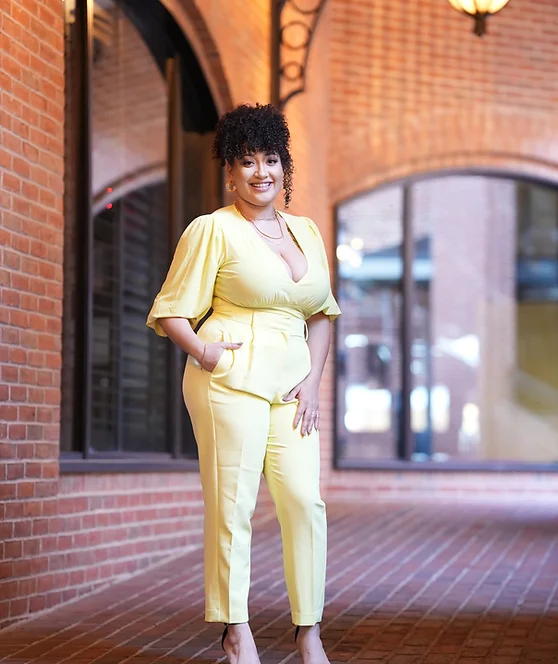
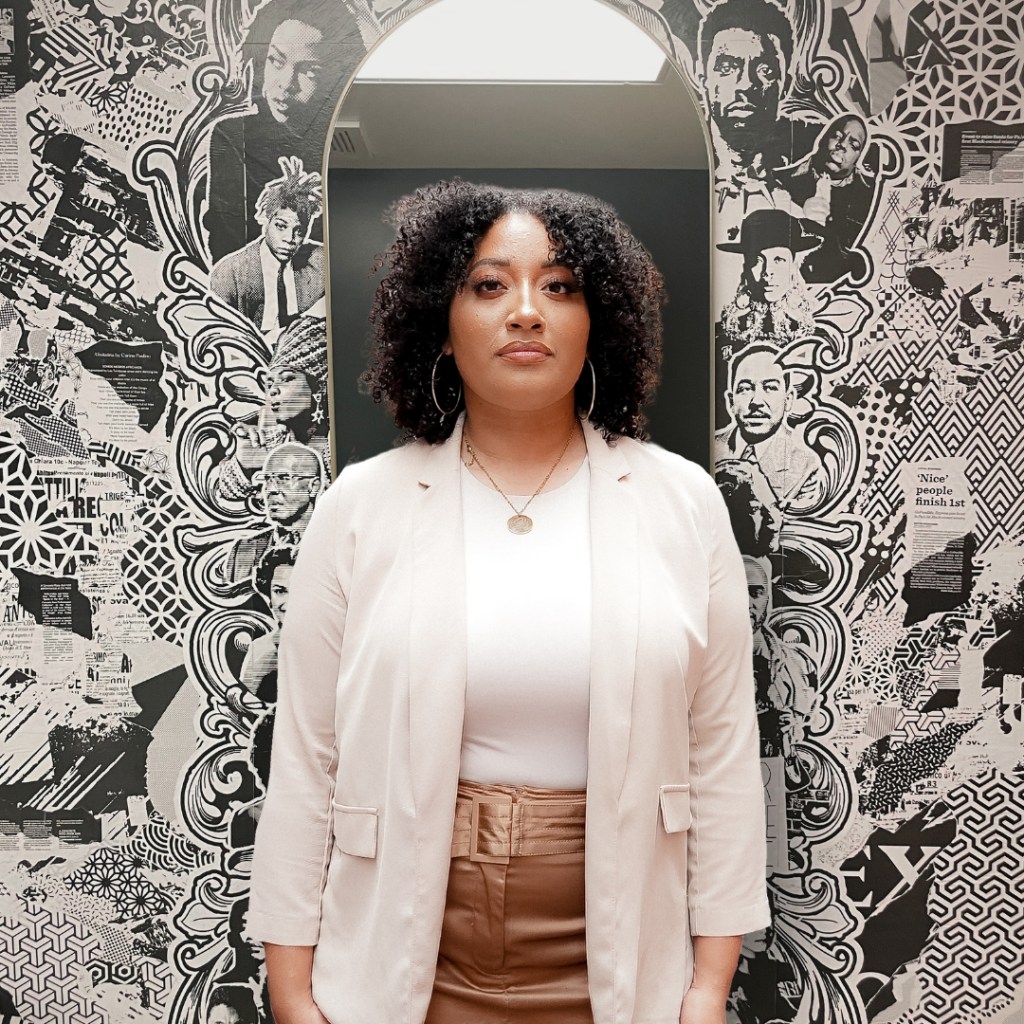
The Poet’s List is continuing to celebrate National Poetry Month with in-depth interviews. Today, we’re travelling to the heart of Lancaster, PA, where poet Evita Colon has been working to cultivate and redefine its arts scene in a powerful way.
She is purpose-driven in her work; with a longstanding focus on protecting and propelling BIPOC creators. Through her stage play, “Speak to My Soul: A Montage of Voices,” and its subsequent projects, Evita has lived out her mission in a tangible way. In 2023, she was installed as Lancaster City’s very first poet laureate, and has carved out a lane for what it means to exist in the role.
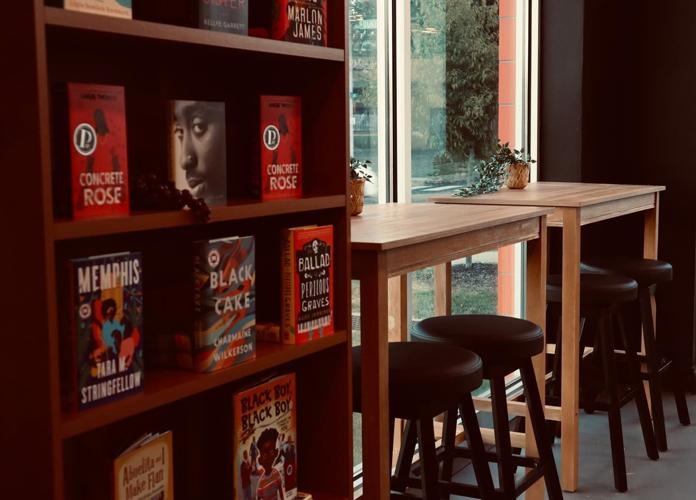
For poets in Lancaster City, Evita invites you to visit her bookstore and micro-winery, A Concrete Rose; where you will find a safe space to create.
For poets worldwide, The Poet’s List invites you to indulge in the thoughts and words of the poet-known-as PoeticSoulQueen, as we present our interview with the fantastic: Evita Colon.
On Poetry:
We came across an interview where you shared a bit of your origin story, so we know that your poetry journey started early! What memories do you have of your relationship with literature and writing as a youth?
As a child, I held a lot of anger and acted on my anger in violence because I didn’t know how to express my needs and feelings in a healthy way. Writing, in general, was an escape from what I was experiencing. My mom—also a poet—gifted me with Tupac Shakur’s “The Rose that Grew from Concrete” poetry book when I was 10. Much of the themes in the book were themes I could relate to, and much of it was expressed in my language. It was different from the poetry I was learning in school and I saw myself represented in it.
I began writing free verse poems without the constrictions of academic poetry, and it felt liberating to release the pain I was feeling and my questions and perceptions of the world around me. I was raised by poets, so poetry was always a part of my life. But, that book helped me see myself as a poet.
In high school, my mom connected me with a spoken word mentor, and I was empowered to recite my poems out loud. When I tapped into spoken word, there was a level of safety I accessed. Poetry created a safe place for me to be seen and heard, while cultivating a community of support for me as a poet and as a person.
In my early childhood years, my parents required me to read most of the day. I engaged in other activities, but much of my “free time” was spent reading. I found a sense of escapism in literature; I was accessing stories and worlds I [knew I] may never experience, while forming my own opinions on the information I consumed. If I didn’t know a word, my mom would make me look it up in the dictionary. If I didn’t understand an event or concept, I was led to read my encyclopedia collection. After I read, my mom would then engage in a conversation with me about it. I became well versed in diction at a young age and I explored the world through literature. All of these things made me a stronger writer, but hip hop made me the poet I am today.
When did you begin to claim the title of poet and how did you first connect with the poetry community?
I was very hesitant to call myself a poet when I began writing. I felt as if I didn’t have the educational background to consider myself a poet. My poems were not written or performed in what [some] may call “proper” English. I later realized, it was my insecurity as I saw myself in-proximity-to whiteness rather than impactful from my background and experience.
I didn’t claim the title of a poet until I began consistently performing spoken word at my university and received feedback from people in the audience. I realized [that] my words were creating a transformative shift in others and, it was then, [that] I stepped into my light as a poet.
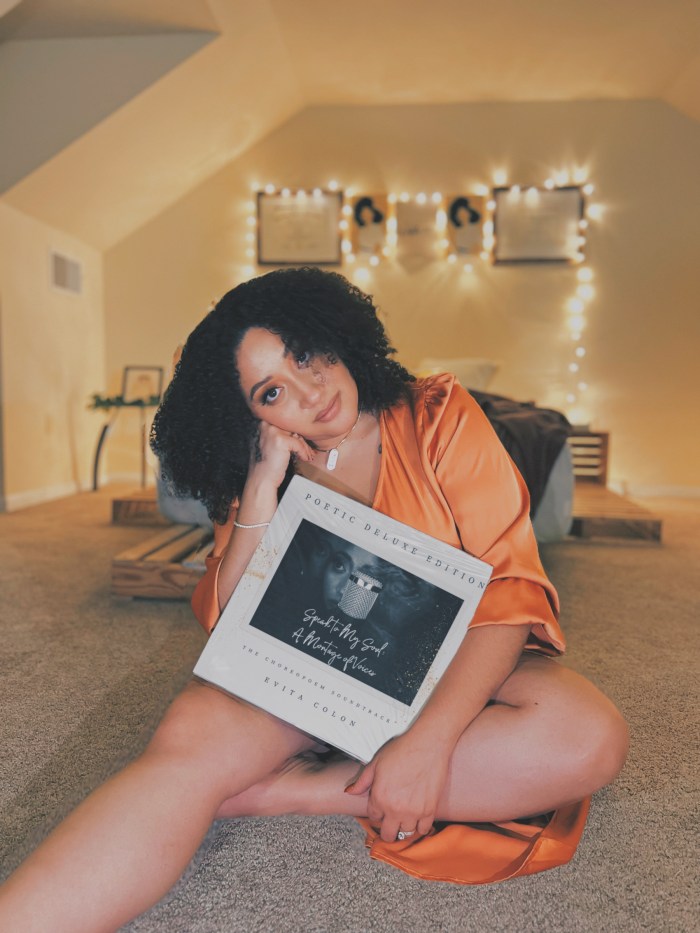
When I wrote, “Speak to My Soul: A Montage of Voices,” I didn’t have a title for the choreopoem. My mentor in college asked me what I feel I’m doing when I perform, and I responded: “Speaking to their souls.” At the same time, I felt the stories of my ancestors and my people “spoke to my soul,” and I translated those voices into poems.
When I leaned into my work with “Speak to My Soul,” people started to call me the Soul Queen. It was then I felt I really harnessed my power as a poet. Hence, the stage name: PoeticSoulQueen.
In your opinion, what makes a good poem?
Transformative storytelling makes a good poem. If you can write or recite a poem that takes your reader/listener to a place or experience, you have created an alchemy of words. It does not always have to rhyme or have a pattern as academia would suggest. For me, poetry should always be transformative for the poet and the person digesting your words. A great poem leaves your listener with a call to action—something to sit with or think about; purposefully written and intentionally executed. The proper use and execution of wordplay, allusions, and figurative language make great poems, because they are tools to enhance your storytelling.
On Your Career:
You have made history as Lancaster, Pennsylvania’s first poet laureate! How does it feel to hold the title and how has it helped to further your personal mission within poetry?
I feel honored to be named as Lancaster City’s first poet laureate. I’ve committed to years of using poetry to evoke needed conversations and action in the community. [I’ve used it to] protest injustice and [to] help others process their experiences by cultivating healing spaces—with poetry as the foundation. For a long time, it felt like my work went unappreciated and unseen, but that is the work. You are not always applauded for being a trailblazer or changemaker.
Being the first of anything comes with its caveats. There wasn’t a structure for my tenure as poet laureate. I just continued the work I was already doing. It is a prestigious accomplishment; however, being the first in the city, there still was a gap in appreciating poetry in general.
After the announcement of my installation, promotion of my work seemed to die down and I had to push to amplify and fund the projects I worked on. Much of my work included advocating for equity in paying poets—and artists of other mediums—for their impactful work, while using poetry to create healing spaces for marginalized communities.
You are the co-founder of A Concrete Rose Book Bar in Lancaster, which you have described on social media as a “Boutique Black Bookstore, Micro-Winery and Performance Venue.” It sounds so unique and multi-faceted. We’d love for you to tell us more about it.
I created A Concrete Rose with my wife, Solise, with the intention to create a safe and liberated space in Lancaster, PA which centered, amplified, and celebrated people of the African Diaspora. As Afro-Latina artists, many spaces felt suffocating for us to perform, meet or rehearse in, as Lancaster is predominately white. We intended to create a business that addressed the gap in inclusive spaces; but the business had to authentically reflect who we are.
Reflecting on the many movements of Black liberation, education was always [at] the center of organizing. Many of the locations for organizing were Black bookstores. They were much more than a business. They served as community hubs; safe places for people to meet, learn and connect. Lancaster did not have that kind of space, so we built it. We incorporated the bookstore to provide our guests with different narratives of the Black experience, rather than the narratives that are often harmful in the media.
Including winemaking was not a part of our initial plan. We wanted this to be a bookstore/wine bar, but could not afford a liquor license. Winemaking was birthed out of being creative with our lack of resources. When we learned there were less than 1% of Black professionals in the wine industry—[despite] Black people [being] major consumers—we dedicated ourselves to dismantling the ideology of wine being only for a specific kind of person, race, socioeconomic status or class.
Moreover, we aimed to be the representation we wanted to see. Quite naturally, using A Concrete Rose for our weekly open mic—Griot’s Garden—aligned with our mission to encourage and empower expression without limitations.
All of A Concrete Rose was created out of our own personal needs in society. However, the impact proved [that] many more people were seeking a safe place to call home. A Concrete Rose is home.
May you speak on “Speak to My Soul: A Montage of Voices,” its reception and success?
“Speak to My Soul: A Montage of Voices” is my creative baby. I initially created the choreopoem in 2013 after being inspired by Ntozake Shange’s “For Colored Girls Who Considered Suicide when Strength isn’t Enuf.” My motivation to turn my poems into a stage play came from having my son in 2013 and desiring a fruitful legacy to leave him when I am no longer here.
I was attending undergrad at Shippensburg University, a predominately white institution, and yearned to create something to tell the stories of the Black students on campus. I interviewed Black students from different backgrounds, and people in the community, and found similar themes in each of their stories. As a sociology major, I included research on concepts and theories of Black scholars, activists, and writers to find a deeper understanding of their experiences. With the themes and research I had in front of me, I wrote poems of their collective experience, labeling each character by their theme or stereotype such as: The Bitter Woman, The Double Minority, The Incarcerated Brother, The Educated Sista etc.
In a standard play, a character’s journey is linear throughout the play. I wrote each poem [so that] each character’s rising action, climax and falling action [would] happen over the course of their poems, which were presented as poetic monologues. I incorporated dance and music to bring the poems to life on stage. These were real stories [that] I was honored to portray. But [it] took much empathy and emotional reckoning with my own healing every time I presented the play.
When it debuted, I thought it would just be a one-time experience. However, people in the audience of all races and backgrounds were moved by the production. Black people felt seen and empowered in ways they haven’t before and people of other races shared [that] they empathized with the narratives displayed in the production. It was intended to feel like you were having a heart-to-heart conversation with someone from the Black community; very intimate and raw. However, the work did not end there because it led to the facilitation of workshops and healing spaces to truly progress with this idea of liberation for all. My focus was always to liberate and help my people heal. The ripple effect of that was the understanding [that] we all need to listen to each other’s story so we can be better neighbors to each other.
Each time I’ve produced the choreopoem, it has been different. As the world changes, our experience and understanding of it changes. I’ve revised the poems and brought in other poets to give them the platform to tell their stories through their lens. I’ve had to go back and change poems as I accepted who I am as a Black, Queer woman, mother and wife. Our last production of the play featured only Black women and the stories were told from a divine feminine perspective. In the future, I look forward to these stories being told from the perspective of different people such as Black men, Black LGBTQ+ folks, Black children etc. The Black experience is not a monolith, and we only have but so much stage time to portray everyone. So, I’m always open to revisiting the show from the perspectives of others, while keeping its foundation [centered on] Black experiences though song, dance and spoken word.

I’ve added more to the platform since its inception. I have been consulting artists who are seeking guidance on transitioning to a full-time career. I center BIPOC artists with my Soul Tribe Collective, but I’ve worked with people of all backgrounds and races.
[With] Speak to My Soul LLC, we’ve acted as an agency [which] assists and advocates for our artists during gig-bookings. We also offer a community of emotional support, because the journey can be challenging and lonely. The community we nurture provides us all with the resources we need to make our dreams come true. Funding is always an uphill battle, but funding doesn’t have to be the obstacle that inhibits us.
With this work, Speak to My Soul lives on, empowering artists to harness their power and create art with purpose. Every artist I work with has a personal mission that aligns with Speak to My Soul’s mission to empower, educate, and elevate.
All of this stemmed from poetry which led to a play/choreopoem, magazine, workshops and eventually, A Concrete Rose. Poetry is profoundly powerful in a special way.
In poetry, what is your most cherished accolade or accomplishment?
My poetry has provided me with the opportunity to receive many accolades: the NAACP Presidential Social Justice award; a feature [of my poem], The City, on an album with many legendary musicians; membership with the FLO Poets Collective and The Recording Academy, and more. However, I am most proud of how my words have made people feel seen.
Poetry is my inner thoughts on display for others to experience. I share them as a release, but when people feel connected and say it made them feel like they are not alone in this world, I cherish that feedback the most. It affirms [that] I am not alone and I [that] am walking in my purpose. I cherish the fact that my son sees me expressing myself courageously and freely and believes he can harness his own power with his voice. When I empower others to embrace their voice, I feel I’ve succeeded in my craft.
On You + Advice:
What aspect of your hometown has been the most impactful?
Lancaster is a small and growing town that seeks progression, but sometimes misses the mark on what progression looks like; especially for marginalized people. I love how Lancaster provides a place for artists to be catalysts for change. I feel it’s special for us artists to be invited into these changemaking rooms due to the art we’ve created during political unrest, pandemics and through our experience. We are given a platform to voice and implement our ideas into the growth of the city. I didn’t sign up to be an activist but, through my art, people began listening to what I’ve said and [started inviting] me to facilitate workshops. I don’t have all of the answers, but this community has nurtured me in a way [to where] I feel we can find solutions together.
What advice can you give to poets who are looking to forge a semi- or full-time career with their art?
I believe [that] many artists struggle with consistency in this world of instant gratification. It is hard to keep producing—and attempting to share—your art with people [who have] short attention spans. However, “creating with purpose” elevates your art above work [that is] “created for a moment.” People are seeking authenticity and there is value in being true to yourself.
When seeking a full-time career of any kind of art, it is pertinent to understand business. We are no longer in a world where we can just focus on the art. We have seen many artists who have trusted others to do everything for them without understanding the basics of business; [and they have lost] money and opportunities due to it. You don’t have to know how to do everything, but it is important to have some understanding of the foundation of building a business.
As a full-time artist, that is what you are: a business. People have to trust you or your brand [in order] to invest their hard-earned money into it. Artists often place the business of it all on the back burner and are taken advantage of or never reach their peak. I suggest finding many mentors you can learn from to guide you through the thick of it. Being a full-time creative entrepreneur is hard, but you really have to remember the purpose of it all, or you will get lost along the way. Lean into faith while planning for any leap you take.
What is the best piece of advice you’ve received thus far – poetry related or other?
One of my mentors, Natalie Stewart, the Floacist, has imparted so many gems of wisdom on me about being a poet, while honoring my own humanity. When I connect with her, we talk about life, poetry and everything in between and then she creates writing prompts based on what we’ve talked about.
When you give yourself the space to write whatever is on your mind, it just flows. Although the advice was not directly implied, I’ve learned not to force poems out. These poems live and breathe within us. We just have to give ourselves the permission to be a vessel for what God has put on our heart.
Once I opened myself up to that process, I became a better poet. She also told me [that] the open mic is not the final place for poets. The open mic is a place where we workshop new pieces, practice our performances and receive feedback on what we’ve shared; but there’s so much more we can do. A poet can thrive in any space, any industry, or medium of art. We can be filmmakers, directors, playwrights, songwriters, and more. We have to see ourselves outside of open mic features because the world is more vibrant when we share our poems in unconventional ways.
She also reminded me [that] every poem isn’t for everyone. Some of my writing can be for me. I never wanted to be a sad poet or an angry poet; both feelings are valid, but it is not all that I am. She has guided me to shift from solely venting on stage to being, “solutionary.” If I am experiencing this emotion, how can I walk others through my process of reflecting and navigating it? My poems have shifted to seeking understanding of the most difficult topics and leaving others with a call to action in them when assessing their own experiences. It is transformative and empowering; even when we feel powerless. It is curious and seeking, even if we don’t have all of the answers. I’m grateful for her poetic and spiritual mentorship, as it has helped me grow immensely.
My other piece of advice that I hold dear is from my mom. As a poet, sometimes our poems are controversial because we are led to say the things that can liberate others. I have felt the backlash of actually living through my words. She has always reminded me [that], “there’s life and death in the tongue.” This is powerful to me because it reminds me of the power of my words, not only in poetry—but beyond the page and stage.
When it becomes hard to speak my truth, I remember her words: “Unfortunately, greatness is not purely great. You’re not just called to greatness, but uninvited persecution for your greatness and sometimes for just existing.” With her words, I dare to exist in my wholeness and invite others to do the same. For me, these gifts are God-given and I don’t believe God would choose me for this path if it were something I can’t handle. I am great not only because I am skilled at my craft. I am great because I am in alignment with my purpose.
Lastly, my elder, Brother Saheeb’s words: “Faith and fear cannot live in the same heart.” That advice is priceless.
Is there any additional information that you would like included?
I am releasing my 4th studio album this summer titled, Alchemy in the Space in Between. I gave it this title because I view poets as alchemists. We take experiences and observations—beautiful, painful, and everything in between—and transform them into something others can experience with us.
I see the “space in between” as so many things. It could be: the time in between our beginning and end of life; the space in between emotions we feel; conversations we have; and dreams we desire. The space in between could be nothing, but it can also be everything.
Poets—and other artists—make “nothing” into “something” that lives beyond our space, and intercedes with the spaces of others. We are matter, and what we create matters. Much of my poetry has centered around others’ stories and I have written from a place of connectedness to those themes. However, with this album, I am writing from a place which centers myself and invites others to share and hold space for the things I’ve experienced. It is personal, but relatable, and I hope others are inspired to center themselves a little more in a way that liberates them as it has done for me.


Links:
Site: iloveevitacolon.com
Facebook: Evita Colon
Twitter: @PoeticSoulQueen
Instagram: @poeticsoulqueen
YouTube: Evita Colon
*This interview has been condensed and arranged for brevity and flow.

The views and opinions expressed here are those of the featured artists (ie. poets, authors, writers and experts) and do not necessarily reflect the official policy or position of The Poet’s List LLC. Any content provided by the artists are of their opinion, and are not intended to malign any religion, ethnic group, club, organization, company, individual or anyone or anything. Legal
