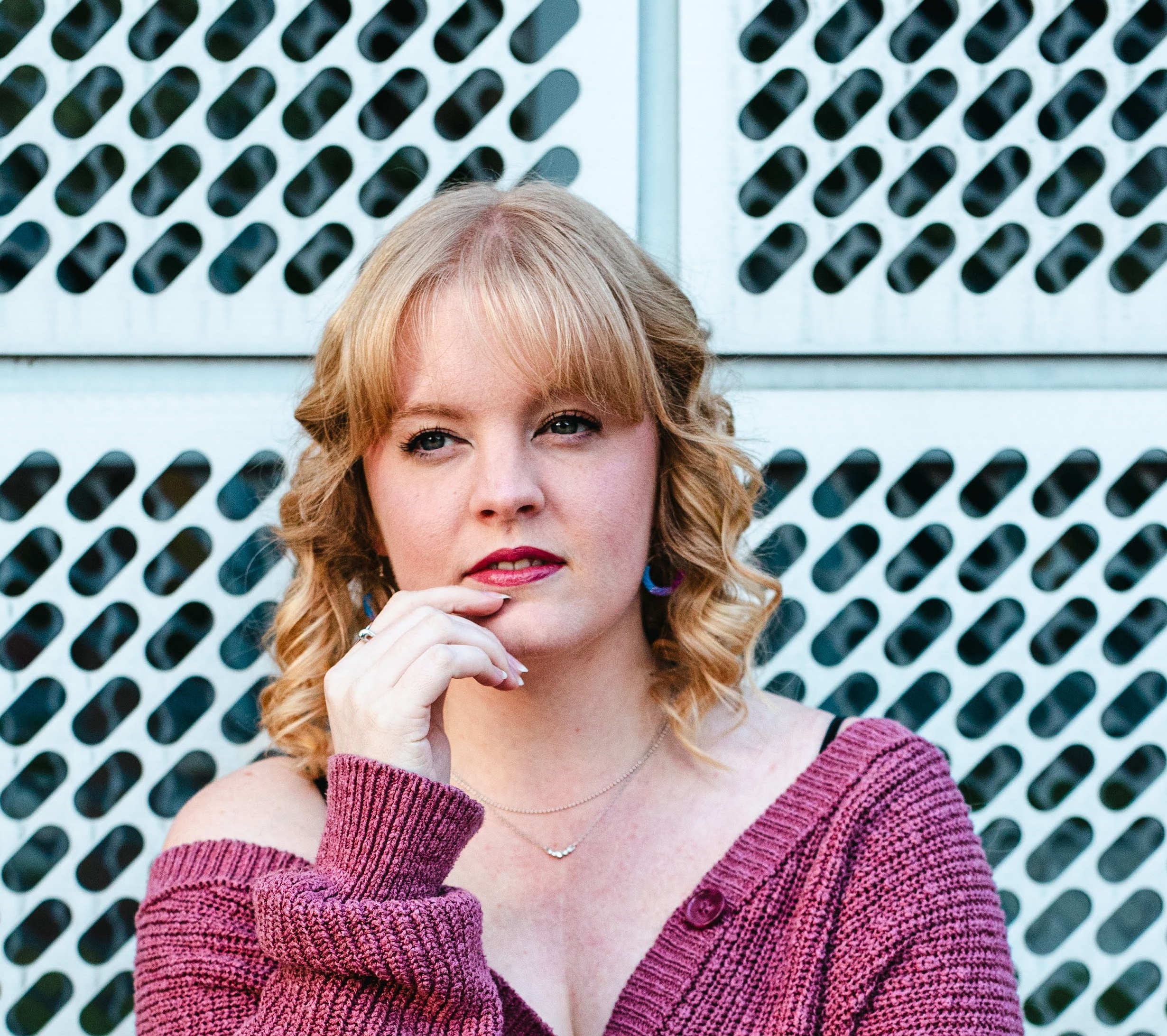
KELSEY BIGELOW
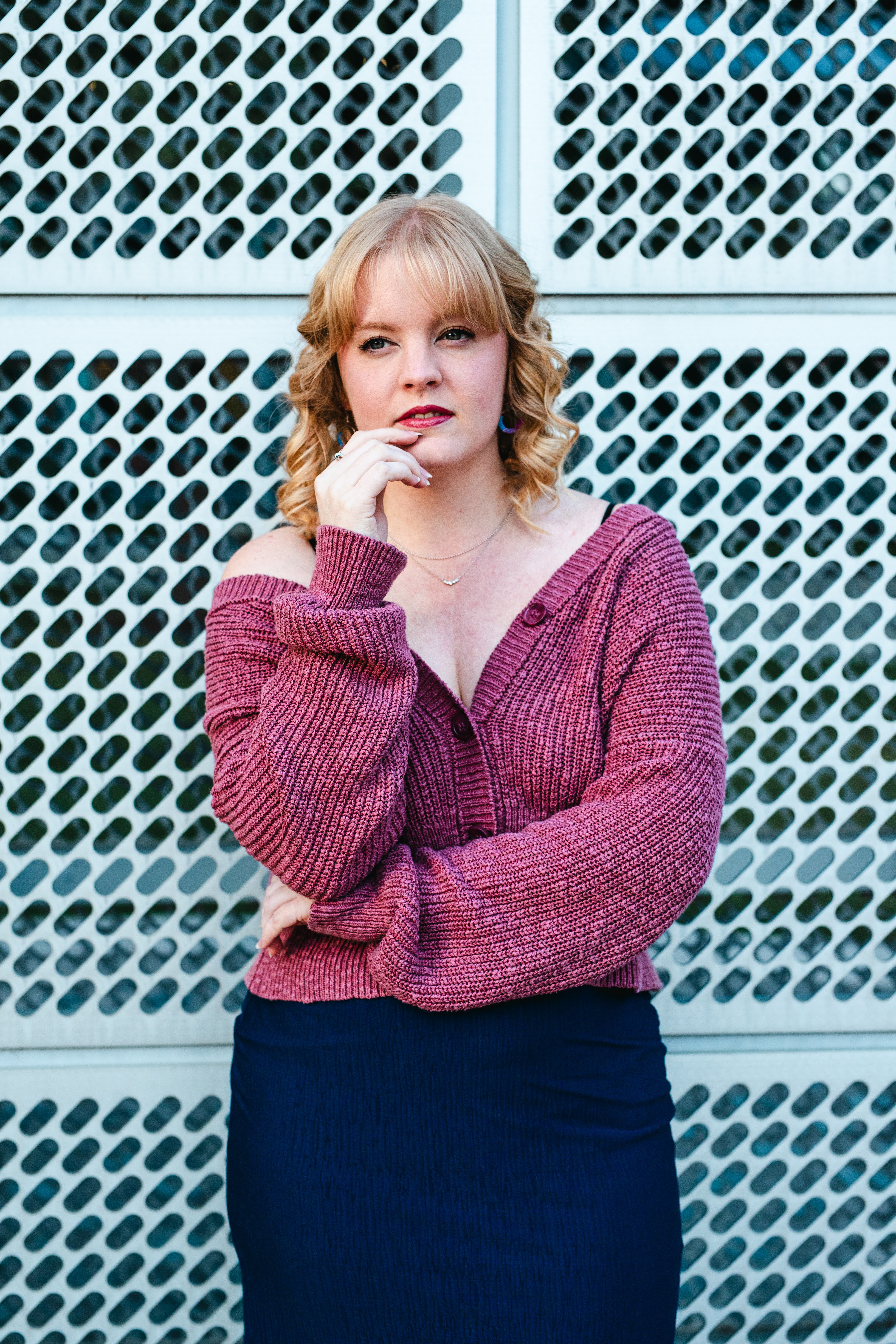
The Poet’s List is continuing to celebrate National Poetry Month with in-depth interviews. Today’s feature spotlights the beautiful soul and incredible wordsmith that is, Kelsey Bigelow.
On social media, she offers generous glimpses of her life and unfolding healing journey. She captivates with honest captions and she thrills with her poetry. In fact, her virtual Poetry Potlucks—a prompt collaboration with poet, Caleb Rainey—are always something to look forward to.
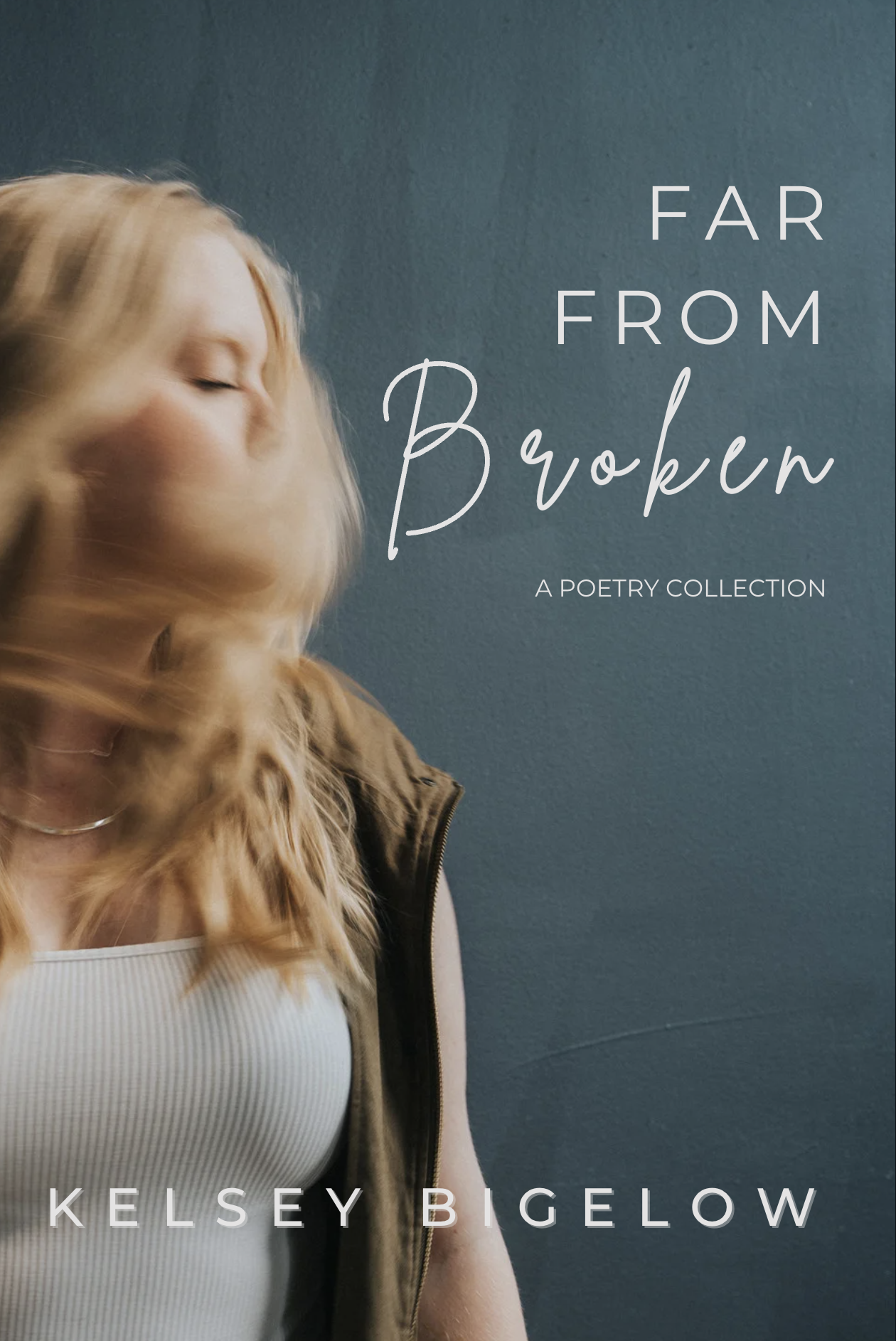
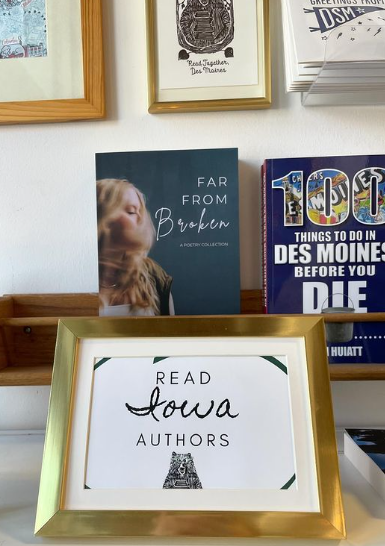
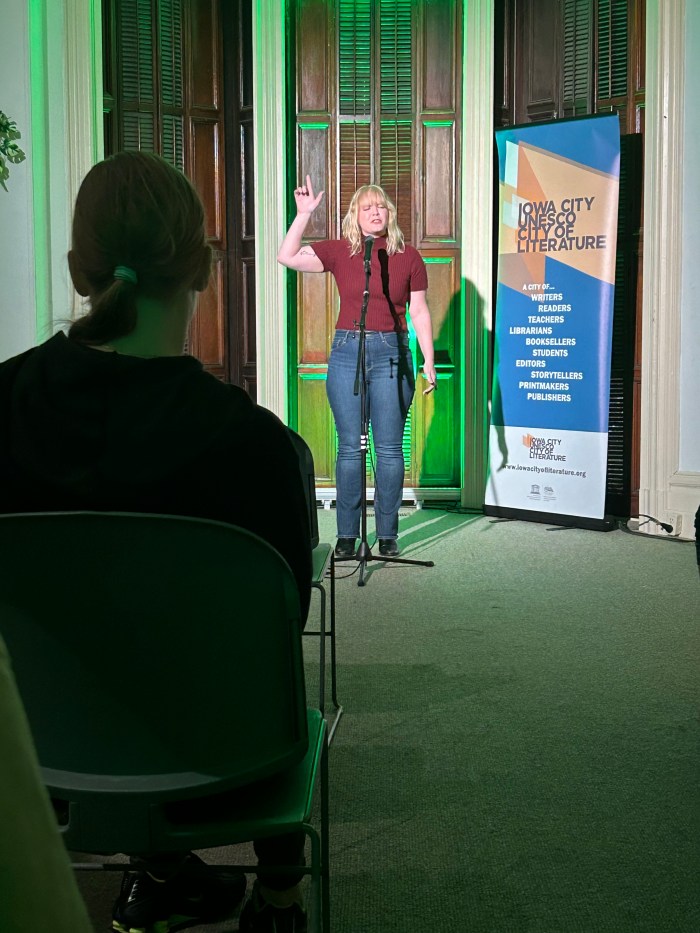
In Des Moines, Iowa, she is deeply rooted in the poetry scene; having co-founded the hugely successful Des Moines Poetry Workshop and highly involved with several esteemed organizations. Now, with the release of her latest book, Far From Broken, Kelsey embarks on a new chapter; hoping to lend her story and lessons-learned to those who may need it. Here are the first few lines of her book:
“Dear reader, I hope you do not relate to what’s ahead. If you do, I hope you see that you are not alone, and a better life is possible.”
Joining us to speak on her life, career and healing, The Poet’s List is proud to present our conversation with, Kelsey Bigelow:
On poetry:
Prior to landing on poetry, what memories do you have of your relationship with literature and writing as a youth?
Writing has always been my coping tool. When I was around 13 years old, I started writing in a notebook to help me understand what I was thinking, feeling, and experiencing. I didn’t have anyone in my life I could talk to, so my notebook became my confidant. Through that practice, I found the power that words hold over communication and fell in love with the process.
When it comes to literature, reading was always my escape from some of the hard realities I was living. I remember starting to read short chapter books in kindergarten and burying myself in the worlds [those] authors created. I used to love scouring library bookshelves for the latest series I could get lost in for a weekend. It’s been a long time since my relationship with reading was that intense, but I still thoroughly enjoy getting enveloped in a good book when I allow myself the time.
When did you begin to claim the title of poet and how did you first connect with the poetry community?
My relationship with poetry has been an interesting one. I’ve been a poet since eighth grade when I first started writing poetry, but I kept it private and never admitted to myself that I was a poet. Though, I should’ve known it back then because a boy I was “dating”—or whatever you call middle school relationships—said he didn’t “want to date me anymore because I talked like a poet.” Even he knew before I did!
In college, I knew I loved poetry and was active in the creative writing and poetry courses I took—and I took as many as I could. But I still wasn’t actively telling anyone that I was a poet. I didn’t understand that I had already earned that title simply by writing poetry.
When I first moved to Des Moines, I didn’t know anyone and was hoping to find poets to workshop with like I had with my college classmates. A Facebook search brought up the Des Moines Poetry Slam. I didn’t know what a “slam” was at that point, but it said “poetry,” so it had to have poets, right? I went to watch and try meeting people. I had never truly performed my poetry before, but the founder—who I had met that night—signed me up to compete. I was enough of a people-pleaser back then that I wasn’t going to push back and not do it. So, I got up there to perform—and [I] made it to the second round as a first-timer! When I got off stage, she asked me how it felt. I told her, “That was absolutely terrifying, and I’m doing it for the rest of my life.”
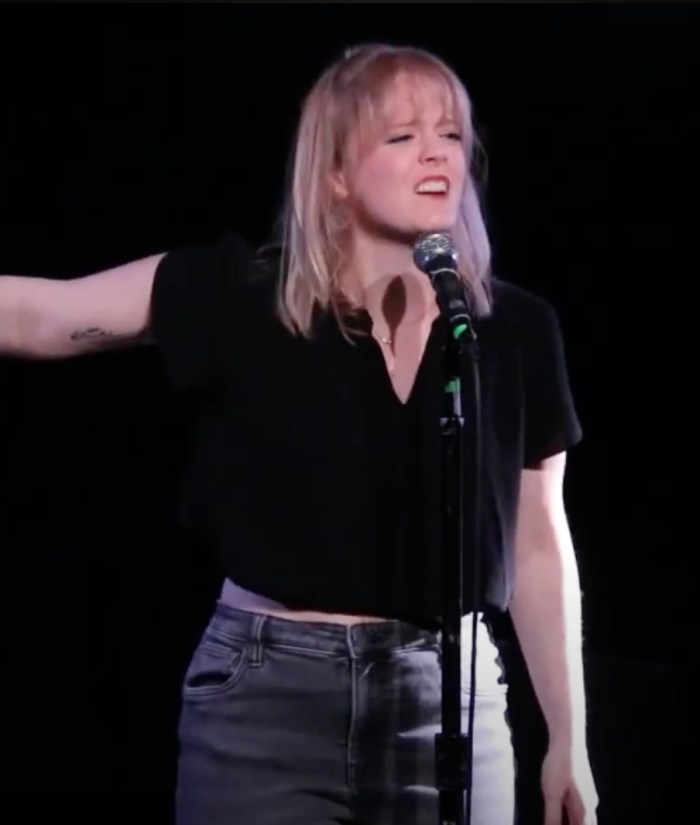
That was the moment I started claiming the title of poet. I had never felt surer of who I was than when I was on stage sharing my poetry and connecting with the audience. From then on, I introduced myself to people as a poet, even at networking events for my corporate marketing job. I was a poet, and I found my poetry community.
Ever since, I’ve been working to help our community keep growing and thriving. It’s been the most meaningful work, and I’m honored to claim the title of poet and help more folks see that they, too, are poets.
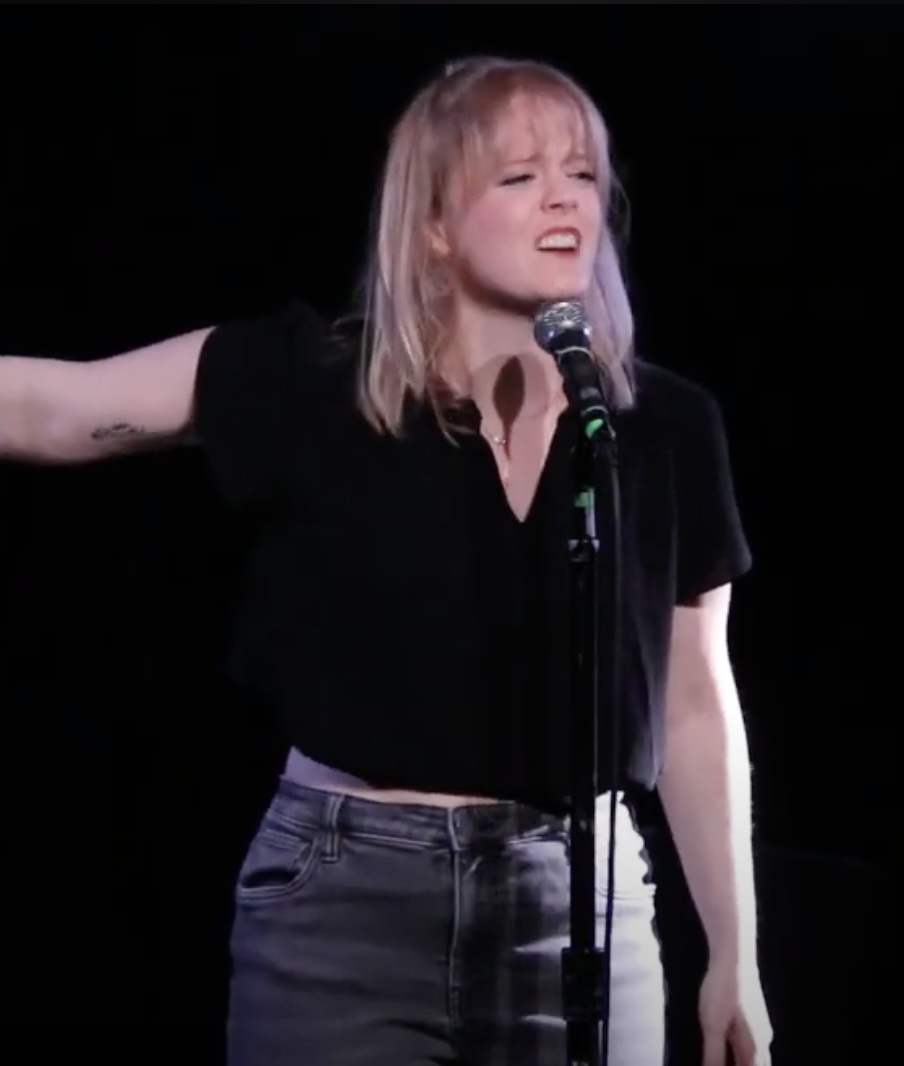
You are a board member for the Iowa Poetry Association and leader of the Des Moines Poetry Workshop! What initially brought you to Iowa and how has it impacted you? Please also feel free to say a few words about these organizations if you’d like.
The short version that I often tell people is that I got a job in my field. As an English major who didn’t want to teach, you tend to take any job that’s remotely related to your communications skills. The job I got was as an editor at a marketing agency.
The real story is that Iowa was never on my radar. I’m most recently from Wisconsin, where I graduated high school and college. My senior year of college, I was dating someone who lived in Iowa, and we had made plans to move in together. That’s why I started applying for jobs in the area, including the one I accepted in Des Moines. Unfortunately, we suddenly broke up only a couple of weeks after graduation. It was an emotionally damaging breakup for me, in ways I’m still discovering and healing. However, I decided to accept the job I was offered in Des Moines anyway. I was ready for a new life and new paths, and I was no longer going to let someone else deter me from what was best for me.
Moving to Iowa, despite feeling deeply broken, brought me an incredible sense of selfhood and independence. I found a beautiful poetry community that has only grown in the almost-seven years that I’ve been here. I navigated a corporate marketing career that was challenging but taught me everything I needed for when I would eventually go out on my own as a poet. I found myself and listened to my purpose that had been calling me my entire life.
The poetry community in Iowa saved my life. More than I’ll ever be able to explain to them. The Des Moines Poetry Workshop, that I founded in 2018 with a few other local poets, is now a thriving organization full of brave poets sharing their hearts with each other. That’s the most beautiful thing I could’ve ever created. The Iowa Poetry Association invited me in with open minds, and we now have a growing poetry slam series that’s bringing poets together across the state who never would’ve interacted before. How much more poetic can that be?
And I would be remiss if I didn’t mention the lovely folks at Iowa City Poetry for being some of my biggest supporters and dearest friends. We may live in different cities, but I wouldn’t be the poet I am today if Lisa Roberts and Caleb “The Negro Artist” Rainey hadn’t started inviting me out to perform and lead workshops in Iowa City as much as they have these last several years. They’ve helped me feel at home and like this career is possible.
All of this is to say that, somehow, moving to Iowa was unexpected and exactly what I needed to find myself, my purpose, and my life. Grateful is too simple a word.
In poetry, what is your most cherished accolade or accomplishment thus far?
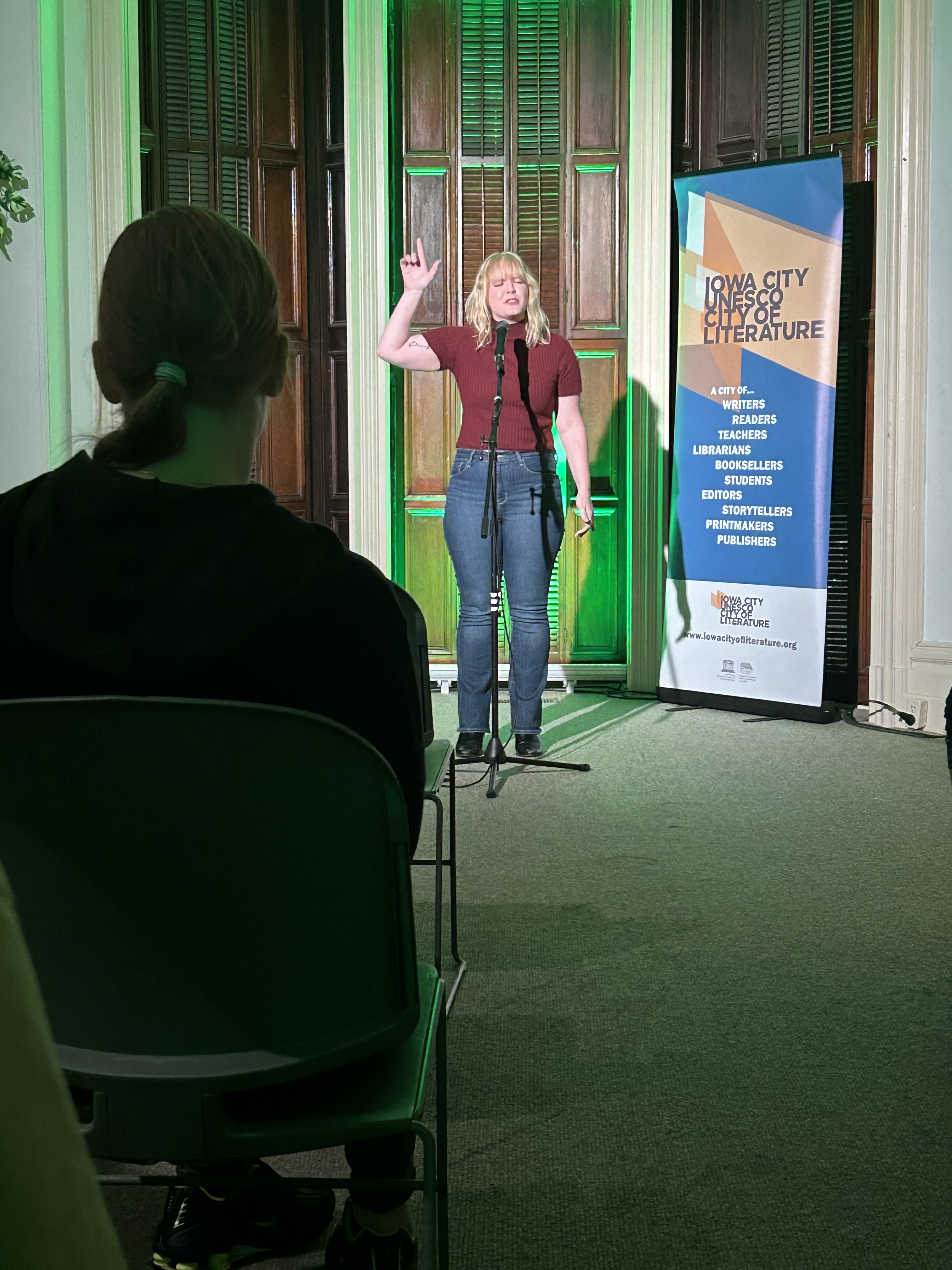
While I have a list of accolades that sound impressive and look good in a bio, my most cherished accomplishment thus far is seeing my mission realized in my interactions with others. I work with people of all ages to share poetry as a coping tool with them, and I always see someone impacted by their newfound tool. It’s beautiful to witness.
The one moment that continues to stand out to me and touch my heart all these years later is an interaction I had with a middle school student. He was sitting on the floor in the back of the room with the teacher, and he raised his hand during the Q&A part of the session. He asked me, “How did you get over losing your mom? Because I just lost mine, and I don’t know how to handle it.” I took a deep breath and told him that writing was my way of processing it all and that I could tell myself I was getting to live the life she always wanted for me. He nodded and sat back against the wall while it sunk in. I knew that face well. I wore that face often. My heart went out to him. He was about the same age I was when my mom was first diagnosed with cancer and when I found poetry as my coping tool. I saw him let it resonate with him, and his teacher was gracious.
Moments like these are not rare in the work that I get to do. But they continue to touch my heart and prove this is what I’m supposed to be doing. Moments like these are the best accomplishments I can hope for.
On Far From Broken:
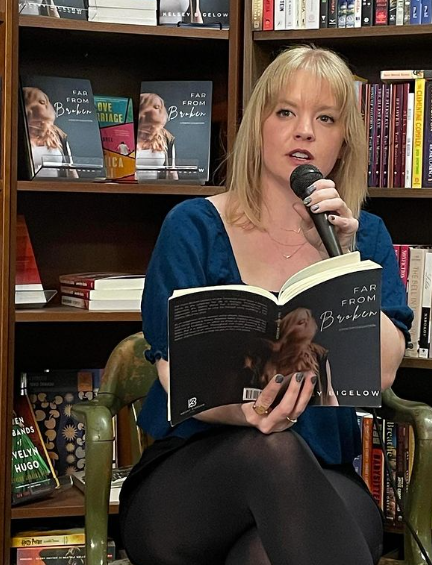
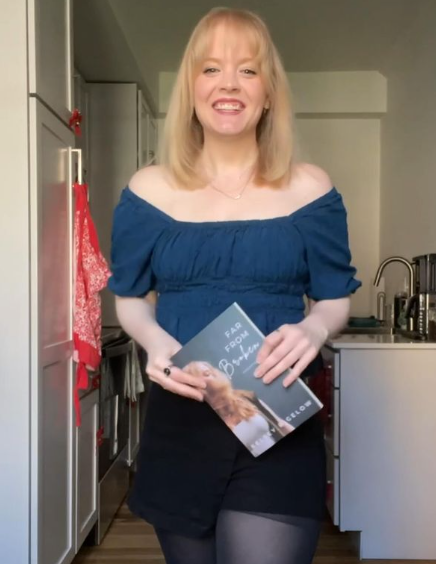
Congratulations on your newest book of poetry, Far From Broken! The excitement surrounding it is so palpable. Can you tell us a bit about your project and how it came to be?
Thank you so much! Far From Broken is a book I’ve been writing my entire life, literally. I’ve included poems that I wrote when I was younger—third grade, sixteen, eighteen, etc. Poetry has always been my coping tool and how I processed the hard stuff I experienced while growing up, and this book is the result of the therapy work I’ve put in to unpack it all. Several of these poems are ones I’ve been performing for years now, but it finally got to a point where it was time for them to live together in a book.
While the timing was strategic for my career, it was also representative of where I’m at in my healing. I had written through as much as I could. Laying the project out brought a whole new wave of unearthing triggers and learning about myself. Simply seeing the poems speak with each other the way they do has taught me where many of my deepest triggers came from. Sharing this book with the world is also part of my healing. Letting myself be truly seen isn’t easy, but I’m ready to work on it.
When I say [that] Far From Broken navigates the hard stuff I experienced while growing up, I mean truly hard stuff. This book is not a lighthearted one. It talks about the abuse, neglect, addiction, etc. that I faced in my childhood. But it also talks about the ways I’ve been able to acknowledge the hurt and begin to heal from it. The book is broken up into six sections of poems: Introduction, Toning Down, Trigger Warnings, Starting Over, Exiting Survival Mode, and Being Okay. Each section is a batch of poems related to each topic from where it all started to how I got through it.
My goal with this book is to share my story in a way that helps others see that they’re not alone. Healing is nuanced, painful, beautiful, and possible.
What is your favorite poem from Far From Broken and why?
Oh gosh. This is like choosing your favorite child. There are many poems I love in this book for what they did for me personally when writing them. I’d say, though, if you were going to read one poem from this book, I’d ask that you read, “When the Map is No Longer Highlighted in Survival.”
This poem is one that talks about how hard it can be to realize you can finally live as you are instead of trying to live through each day. It’s something people don’t often talk about. When you’ve lived your entire life in survival mode, you have a clear path of how to get through. You know what to expect and how to navigate that. But once you get to a safe and healthy place in life, there’s no road map to follow anymore. You were never trained on how to live as you want to, so getting the opportunity is scary. To me, that captures the essence of where I’m at in life right now and where I think a lot of us are.
Think back to some of your earlier writing – even if unshared. In what ways have you evolved as a person – or as a writer – and how is that growth reflected in this body of work?
As someone who started as a page poet and found the stage in my mid-20s, my personal growth has been embodied [in] my poetic growth — which is visible in this book. My poems used to be incredibly short and my college classmates would call me out on that constantly. Now, poetry can be short and can be powerful in only a few lines. But what they were saying, and what I took too long to learn, was that I wasn’t saying everything the poem needed me to say. This tracks with how I was as a child, teenager, and young adult. I never spoke my mind and rarely said everything that needed to be said if I did.
After I found spoken word poetry in my mid-20s, I started realizing [that] people wanted to hear what I had to say. This started showing up in somewhat longer poems—example: 90-second poems instead of 30-second poems—as well as how I spoke up in my regular life. [However,] I still wasn’t always saying everything that needed to be said, or [I] was veiling my true feelings out of fear and habit.
As I approached and reached 30, my poetry got longer when it needed to be—example: 3-minute poems and 5-minute poems. This reflects how I’ve gotten more comfortable with speaking my mind as I’ve gotten older. Granted, I have work left to do in order to be fully comfortable with it, but I’ve grown a lot. And Far From Broken reflects this by including those poems I wrote when I was younger, in my early- and mid-20s, and from my 30th year.
At the inception of your career, could you have envisioned this level of success?
Could I have envisioned this level of success? Absolutely. I’ve always known what I’m capable of, and I’ve been able to dream of this work for so long—and I am still dreaming of higher levels than where I’m at now. There’s something about growing up the way that I did that instilled the belief that I was meant for something bigger. I’ve always been able to see it.
The difference is that I didn’t always know how to get here. I knew I could and would somehow, but I didn’t know what it would look like. For so long, I didn’t see any other poets in my life doing this as a career, and I was feeling lost. Once I learned about poets across the country doing this for real—and learned that a close poetry friend was also making this work happen—I was in it. As soon as I saw that there was a tangible path to get there, I knew I could make anything happen.
On you + advice:
What advice can you give to poets who are looking to forge a semi- or full-time career?
I have so much advice I could give to poets wanting to make this a part- or full-time career. Instead of writing an entire novel, I’ll share some quick-hit tips:
- You must take yourself seriously and treat yourself as a professional. No one else will if you don’t.
- You won’t always have the people in your corner that you thought you would, but you will find the most beautiful people you never expected.
- This career takes sacrifices. You’ll have to give up some nights after the day job to write or to work on the business side of poetry.
- You have to really want this to make it work. There’s no half-assing this if you want to be successful.
- It’s going to take time to build up your career. I worked poetry part-time for years and years before I made enough to take it full time.
- Your poetry career is going to look different than everyone else’s, and that’s okay. There’s room for all of us here to grow together and learn from each other.
You have been very forthcoming and transparent when it comes to discussing mental health. What is one tip that you can share with those who are currently struggling in this area?
Listen to your body. It’s incredibly important to let yourself rest when you need to. Rest doesn’t always mean taking a nap. Rest can look however you want—going for walks, making time for friends, taking a pottery class, taking a day away from devices, etc. Life is easily demanding and overwhelming, and it’s better for everyone if we show up as our best selves. You can’t show up as your best self if you’re not meeting your own needs.
What is one thing that you wish someone would have told you when you were going through a rough time?
“Let me sit with you.” I’m rarely receptive to advice or encouragement in rough times, even if the other person means well. I don’t need anyone to fix my hard days. I just need someone to listen and hold space for me. However, I’m not practiced in asking for what I need or accepting help when it’s offered in the form of an open-ended question, like “how can I help?” If someone were to just tell me they want to sit with me where I’m at, I can easily receive that.
Is there any additional information that you would like included?
To the poet that reads this, your voice is needed. Your story is worth sharing simply because it’s yours. There’s room for all of us, so please make your dream a reality. You’re entirely capable.
Check out the links, below, to keep up with Kelsey Bigelow!

Links:
Site: Kelsey Bigelow
Instagram: @kelkaybpoetry
Facebook: Kelsey Bigelow – Poetry
YouTube: Kelsey Bigelow Poetry
TikTok: @kelkaybpoetry

The views and opinions expressed here are those of the featured artists (ie. poets, authors, writers and experts) and do not necessarily reflect the official policy or position of The Poet’s List LLC. Any content provided by the artists are of their opinion, and are not intended to malign any religion, ethnic group, club, organization, company, individual or anyone or anything. Legal
