
KEVIN POWELL
The Best Spoken Word Poetry Album category, a designation which debuted at the 2023 GRAMMY awards, continues to stir the poetry world with excitement. The new classification allows poets increased visibility, with the chance to have their work honored by the Recording Academy during “Music’s Biggest Night.”
Now, a second crop of lyrical powerhouses will receive their moment of recognition during the 66th Annual GRAMMY Awards on February 4th, 2024.
The six nominated poets for the 2024 ceremony are: Queen Sheba, Prentice Powell, Shawn William, Kevin Powell, J. Ivy and aja monet.
The Poet’s List is honored to present our interview with the dynamic and esteemed GRAMMY nominee: Kevin Powell.
On Poetry:
Prior to landing on poetry, what memories do you have of your relationship with literature and writing as a youth?
My mother took me to the Greenville branch of the Jersey City Free Public Library when I was eight-years-old. My ma had always pushed me to love words, since I was two, three. To spell, to speak. So, little did I know that this trip to the library would change my life forever.
By the time I was 11, and had absorbed mad books, I said to myself privately, “I want to be a writer,” but had no idea how that could be.
It would not be until my senior year in high school that my 12th grade English teacher at Snyder High School in Jersey City, Mrs. Lillian Williams, pushed me to enter a citywide essay contest. I won [and] a much deeper seed was planted. Once I got to college, I just knew this was my great passion, to be a writer.
There are so many layers to creating poetry, and several avenues for disseminating. Which aspect of the process excites you the most?
I just love words in all ways. There is no one way I create poetry. Sometimes words just come to me. A single word, a phrase, a sentence. And I quickly write those things down to build upon later. Sometimes a poem is demanding to be written in one sitting – in one shot – and I just get it out, even if I still go back and edit later.
I have been blessed to create poetry in so many ways, but it always comes back to the written word for me, whether I eventually do an audio book, or this current Grammy-nominated album. I take the craft of writing very seriously, and believe strongly that the words must stand up on the page at the end of the day.
Think about Ntozake Shange’s famous play/choreopoem “For Colored Girls….” That began as a series of poems on the page, and eventually made its way to Broadway and theaters around the world. But to this day you can still read her poems on the page and see how masterful those words are. The craft of writing is what matters most to me, for that reason. Will your poetry, your words, be alive for people 50 or 100 or however many years from now, like Ntozake Shange? Like Shakespeare?
On Career & Higher Education:
When did you begin to claim the title of poet and how did you first connect with the poetry community?
I hated poetry when I was young, honestly! I thought it was mad corny. I wrote fiction and essays in high school and, once in college, gravitated toward being a journalist. Got my first check as a professional journalist when I was only 20, while still in college. But somewhere during my college years, I started writing poetry. Not good poetry, but an easier way to express myself. I did not know writers like me existed until college, I had no clue there were Black writers like Langston Hughes, for example. So as I read him, and many others, I began to think I could write in different genres too, and poetry was just the freest way to express myself. And then I was also coming of age with hip-hop, which is essentially spoken word to a beat, and that gave me the boost to pen poetry too.
Your presence spans a wide range—poetry, television, social justice and politics. You’ve penned 16 books; you have a prominent journalism portfolio; and you have been connected to pop culture from MTV to ESPN. At the inception of your career, did you envision this level of success?
I never use the word career any longer, just like I do not use the word job any longer. I just say life journey that has many chapters. I think words like career and job limit us, put us in [a] box. And the point of being a writer, an artist, a poet, is to be free in all ways. I don’t even use the word success. I just say I do what makes me happy, what gives me life, and I have figured out ways to make a humble living doing that.
I am proof it can happen, but I owe it all back to my single mother, who raised me through terrible poverty, but gave me a serious work ethic and a life-long love of learning. Those two things plus a spiritual foundation. Having faith, always – even when life becomes harsh – that I can get to the other side.
I simply appreciate life, people, all people, all human beings, and see myself as a documentarian of the human experience during the time I have on this earth. If what I write or say or record touches just one person in some way, then I have done something worthwhile. That is what matters to me most.
You’ve previously spoken about how your studies at Rutgers helped to deepen your understanding of some of the most influential poets and authors, including Langston Hughes, Sonia Sanchez and Amiri Baraka. May you share your thoughts on the value of higher education to aspiring writers? How did it impact you?
Going to Rutgers University in my home state of New Jersey changed my life forever. First it made real, as a first-generation college student, that the Civil Rights Movement was not just for folks alive then, but for folks coming, like me.
I got to college because of a program created for poor kids during the Civil Rights Era. Additionally, I entered college literally during the anti-apartheid movement. I had no clue where South Africa was, who Nelson Mandela was, but quickly learned and quickly joined.
This is how I began to find my voice as both a leader and a writer. And I worked at one of the libraries on campus for like two years, and read every book I could get my hands on. Honestly, I was more interested in the library shelves [than] classes.
I had been an A student K through 12. But college, not so much. I was too busy trying to learn my own Black history that had been denied in my education up until then, and I was too busy trying to save the world. But absorbing all those books, history, poetry, other forms of literature, quite literally changed my life. It became clear to me in college two humble things: I am a writer and I am an activist. And both have been the case ever since.
Poetry-wise: Of your body of work, which piece or collection would you like to serve as your *introduction* for the generations to come?
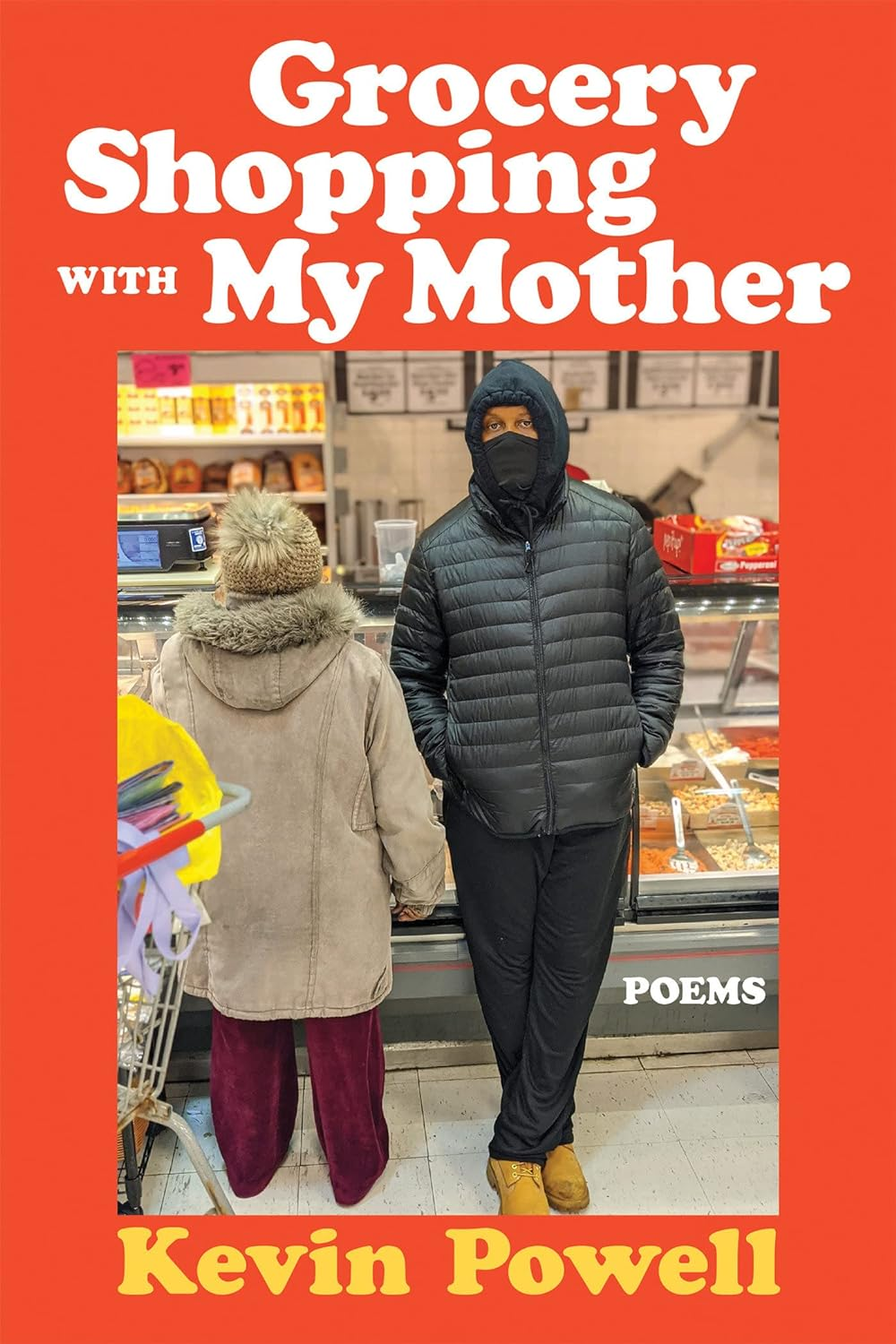
I want people to both read and listen to my newest poetry collection, Grocery Shopping with My Mother. I want people to read the book, listen to the audio book. Both are 36 poems. And then, also listen to the Grammy-nominated version with music, which is 9 of the poems from the book. I want folks to digest this newest poetry from different angles.
We would love to hear more about, Grocery Shopping with My Mother. Please feel free to share as much as you’d like with regards to its creation, its reception and what it means to you. Please also share any available links.
I was scared to death, number one. I have wanted to do a poetry album with music since the 1990s, but: life, a journalism career, two campaigns for Congress… so many different things took me away from poetry for many, many years. But in the last few years, I just started writing – and writing poetry – with a passion I had not felt in a very long time.
So it came to me: make an album with music. Finally. Life is too short to wait any longer.
I know music, deeply, as a fan, and as a long-time music journalist. [I] have been in many studios. But to be the recording artist? I was scared! I must give praise to Miss Tyneshia Hill, who co-produced the album with me, but also was my vocal arranger and one of the featured singers on all nine tracks. I picked all the poems I wanted to turn to music, thought long and hard about the diversity of sounds I wanted, and me and Tyneshia slowly shaped these things into what I called poem-songs.
It was hard! We spent eight months, January through August of 2023 putting the album together, while I juggled other work, and barely made the deadline for the Grammy consideration.
So it is humbling and surreal to have a Grammy nomination. It is humbling to hear people say they are listening to it. To do media interviews, like this one about it. To actually be going to the Grammys as a nominee. But I know what we put into the album. I drew up Stevie Wonder, Lauryn Hill, Nina Simone, Bob Marley, The Beatles, Carole King, Joni Mitchell, Marvin Gaye, so many inspirations to help me turn the poems into poetry with music. I honestly barely listened to any poetry albums while making this album. Tyneshia and I decided early on that we wanted to try a very different approach to poetry with music.
It would really mean a lot to me if readers of this interview take a listen, and also share with others. IT IS ON ALL MUSIC STREAMING PLATFORMS. Here is a link to preview the 9 poem-songs.
In what ways would you like to see the poetry community grow and evolve in the coming years?
I just want more poets – no matter what generation or age or identity – to value and know the history of poetry. To read regularly. To take seriously the craft of writing, no matter what. This Grammy nomination is surreal and wonderful, but I write because it is as important to me as breathing. I write because I know I am part of a long tradition of poets, of writers. That this is far bigger than me and this Grammy nomination.
Awards + Advice:
Having worked in so many high profile (and highly visible) spaces, what advice would you give to poets who are readying to share their voice on a larger scale?
Like Kendrick Lamar said in his rap song: Be Humble. Always. I have been in many major spaces, but I also have the same pride and joy when I have been in small spaces [which] no one has ever heard of. Be humble. If you have been around as long as I have then you already know sometimes life is great, sometimes it is not. Sometimes there are wonderful things happening, sometimes there is nothing happening at all. I am just very grateful to still be here doing all that I love to do, and I cherish every moment. And, I am proof [that] if you put the time and energy and seriousness into your work, your art, your writing, then great things can happen; whether right away, or years later.
What does it mean to be honored by The Recording Academy as part of the Best Spoken Word Poetry Album category at this year’s GRAMMY Awards?
It is one of the greatest honors of my life. I cried when I learned of the nomination. I know where I come from. I know what I have been through. Even in just the past couple of years.
So much sadness, so much loss. In fact, on the day I got nominated, I was in Atlanta to visit a very close friend dying of brain cancer.
So that ying and yang of life keeps things in perspective. I know the Grammy thing is major, just by all the folks who congratulated me from all around the world. But it is what my wife said that really hit me: So few people even get nominated for this award, the biggest music award in the world, and I was. I shall never forget this, no matter what happens.
How would you describe your fellow cohort of nominated poets?
I am honored to be with all the nominees in the Best Spoken Word Poetry Album category. I know it is not easy to do what we do, and we all did it so very differently, which is inspirational in and of itself. I made it a point to congratulate everyone on social media when the nominations came, and will continue to do so. I have never been one for the competition thing. Just not who I am. Like I said, I am honored simply to be nominated. Anything from here is just more blessings, but I already feel blessed, and I pray my fellow nominees feel the same.
What has been the greatest piece of advice you’ve received thus far (poetry related or other)?
From Shakespeare, when I was a teenager in high school: “to thine own self be true.” That is how I live my life, and will always life my life.
And to practice love, peace, kindness [and] humility, daily. That is from my dear wife.
Please tune into the 66th annual Grammy Awards which will air live on February 4, 2024 on CBS. The winner for Best Spoken Word Poetry Album will be announced during the pre-telecast.



Links:
Album Preview: Grocery Shopping with My Mother
Twitter: @Kevin_Powell
Instagram: @KevinPowellinBrooklyn
Site: KevinPowell.net

The views and opinions expressed here are those of the featured artists (ie. poets, authors, writers and experts) and do not necessarily reflect the official policy or position of The Poet’s List LLC. Any content provided by the artists are of their opinion, and are not intended to malign any religion, ethnic group, club, organization, company, individual or anyone or anything. Legal
